
February is Black History month when numerous events are held across Canada to honour and celebrate the contributions made by black people to this country. This year the theme is “Thirty Years of Black History: Honouring Black Brilliance Across Generations – From Nation Builders to Tomorrow’s Visionaries.”
In 1926, historian Carter G. Woodson founded what was then referred to as “Negro History Week.” It later evolved into Black History Month. The month of February was chosen as the month to celebrate because it includes the birthdays of abolitionists Frederick Douglass and Abraham Lincoln linking this celebration to freedom. There have been many heroes throughout the years. Among them are:
- Viola Desmond, civil rights trailblazer, a businesswoman who challenged segregation in 1946.
- Politician Lincoln Alexander the first Black Member of Parliament (1968), a federal Cabinet Minister, and Lieutenant Governor of Ontario.
- Willie O’Rey who broke the colour barrier in the National Hockey League (NHL) in 1958, by becoming the first Black player in the league.
- Jean Augustine, the first Black woman elected to the House of Commons (1993) and the first to serve in a federal Cabinet.
- Jeremiah Jones, a First World War hero who enlisted at age 58 and was recommended for the Distinguished Conduct Medal for his bravery at Vimy Ridge.
- Rosemary Brown, the first black women to be elected to a provincial legislature (BC) and the first to run for leadership of a federal party.
- Carrie Best, a journalist and activist who founded The Clarion, the first Nova Scotia newspaper published by a black person, and who also challenged segregation.
- Portia White, a contralto singer who was the first Black Canadian to achieve international fame as a concert singer.
- The Number Two Construction Battalion, a segregated unit of over 700 Black Canadians who served in the First World War.
All these heroes broke barriers in the military, in sports. and in politics and were trailblazers in their respective fields. These individuals, along with many others, paved the way for equality, diversity, and justice in Canada.
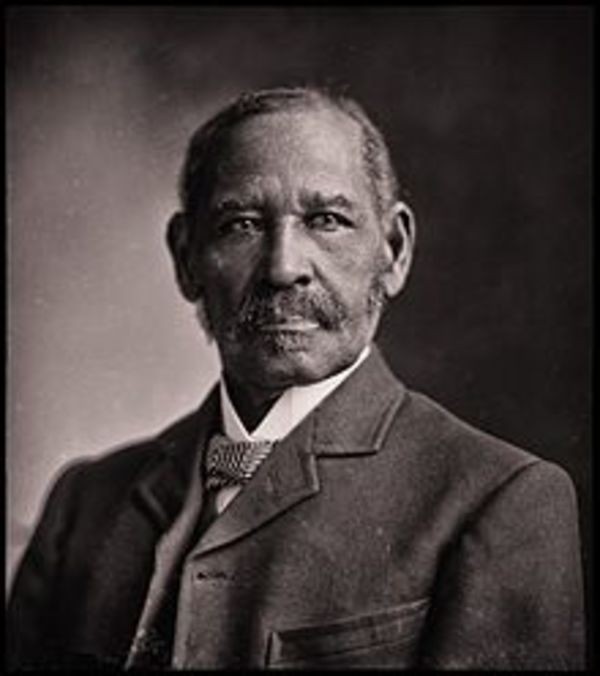
In my own hometown of Victoria, one black man stands out. His name was Mifflin Wistar Gibbs, and he arrived in Victoria in 1858 fleeing racism in California. Ten years later, he returned to the United States as British Columbia’s first black person elected to public office.
During those ten years he had achieved a great deal for Victoria., Although born to a poor, enslaved family in 1823, as a young man he had given many lectures alongside abolitionist Frederick Douglass and took part in the Underground Railroad helping enslaved blacks escape to Canada. He himself had escaped to California lured possibly by the California Gold Rush. He prospered as a boot merchant and publisher but still was the victim of racism, hence heading north to Victoria in 1858. Governor James Douglas was encouraging black people to come north, and an estimated 800 black migrants took him up of his offer of equal opportunity, the right to vote and to be able to open businesses if they pledged allegiance to the British Crown.
Gibbs was very successful on all counts. He opened a general store in Victoria. He was elected to public office joining the Victoria City council by representing the James Bay district. And he also was involved in talks about joining the Dominion of Canada, which he firmly supported. He still confronted racism on one occasion when attending the theatre. Thugs threw flour over him, his wife and a couple of friends wanting them to leave what they considered a “whites-only” area.
Gibbs returned to the States and settled in Little Rock at a time when black people were enjoying unseen political power. He became the first elected black Judge and later served as an American diplomat in Madagascar.
In 2016, the City of Victoria made November 19 – the same day Gibbs was elected to city council long ago – “Mifflin Wistar Gibbs Day.”
There is much to celebrate this February for Black History month.