
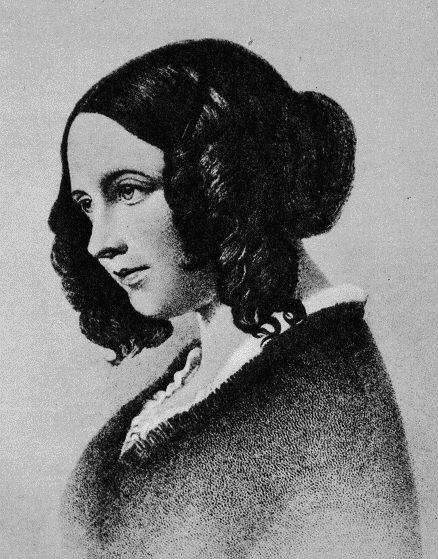
In February of 1835 a young, upcoming writer held a birthday party as he turned twenty-three and, as the daughter of an editor, Catherine was invited. The writer in question was Charles Dickens. After the party Catherine wrote to one of her cousins that “Mr. Dickens improves greatly on acquaintance.” The improvement must have been swift as Catherine soon agreed to marry Charles and their wedding took place in London a year later in April of 1836. Catherine now became Catherine Dickens (her third name.)
By all accounts the young couple were blissfully happy for the first few years of their marriage. During those early years, Catherine bore Charles ten children and had two miscarriages. She was an excellent mother who adored her husband, as he did her.
So, how did this blissful marriage of a couple so much in love who enjoyed parties and family holidays together turn into a marriage where a husband and wife could not bear to live in the same house together.
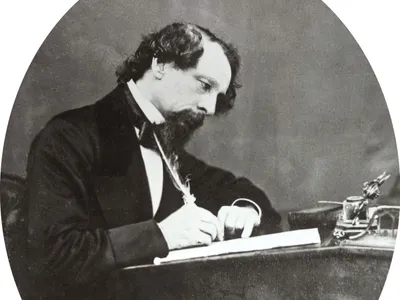 One theory was that being the wife of a famous man was hard for Catherine and rumors abounded that she became mentally unstable and even an alcoholic. Her great-great-great-granddaughter, Lucinda Hawksley, extensively researched Catherine’s life and strongly disputes those rumors. She believes that in fact Catherine was “a fun-loving young woman who, as the wife of an international celebrity, travelled widely and had the opportunity to see and experience things that most women of her era and social status did not.” Charles and Catherine came from vastly different backgrounds though. Charles had known poverty in his youth whereas Catherine’s life had always been comfortable, a lifestyle Charles envied and wanted to emulate.
The couple were also amateur actors and Catherine often performed in shows at home and on stage in both America and Canada when they travelled. How she had the time or energy to do that in between her many pregnancies is a mystery to me!
She did, however, have help with her children, first from her sister Georgina who came to live with them as housekeeper in 1842. Georgina also became a confidante of Charles, which might well have caused tension in the marriage, and she also stayed in Dickens’ home after Catherine and Charles separated in 1858. Another of her sisters also helped Catherine with the children.
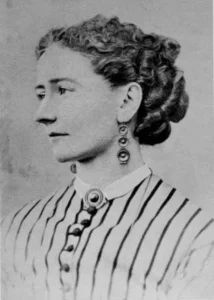
But perhaps the most obvious reason for the break-up of their marriage was Charles’ affair with actress Ellen Ternan who he became besotted with. She was only 18 when he met her and by then he was 45.
There were so many rumors about the relationship between Catherine and Charles Dickens which intrigue researchers like me. There might well be another book there for me to write one day, particularly as two of their sons, Sydney and Frank, have connections to British Columbia and to Victoria, my hometown.
Sydney Smith Dickens (1847-1872) was a Royal Navy lieutenant stationed in Victoria in 1868; he served aboard HMS Zealous and performed in many amateur theatricals at the Alhambra Hall. He was actively involved in the Victoria social and theater scene during that time.
Francis (Frank) Dickens was in Western Canada as an officer with the North-West Mounted Police (NWMP) between 1874 and 1886, but it’s not known if he too visited Victoria.
Catherine and Charles Dickens’ last surviving child, Sir Henry Fielding Dickens, passed away in December of 1933.
Catherine Hogarth Maria Clutterbuck Dickens died in 1879; her husband Charles having died in 1870. By all accounts, Catherine was not the frumpy wife of a world-famous man as she was so often portrayed. Instead, she was an accomplished, talented woman and a writer in her own right. Her published cookbook “What Shall We have For Dinner,” was often attributed to her husband, an indication perhaps that he was jealous of her talent which may well have equaled his own.